Wild Secrets Just Outside the City: My Groningen Nature Escape
You know that feeling when you think a city is all about cafes and bikes, then—bam—nature slaps you in the face (in the best way)? I had no idea Groningen was surrounded by such untouched wilds. Protected areas, silent forests, bird-filled marshes… it’s like another world. This isn’t just a side trip—it’s a full-on recharge. If you’re craving peace, real air, and landscapes that feel alive, you gotta check this out. What surprised me most wasn’t just the beauty, but how close it all is. Within minutes by bike, the urban hum fades, replaced by wind in reeds, distant bird calls, and the soft crunch of gravel underfoot. These green sanctuaries aren’t hidden—they’re intentionally preserved, part of a national commitment to balance city life with wild space. And for someone like me, seeking moments of calm amid daily responsibilities, they’ve become essential.
Why Nature Around Groningen Surprised Me
When I first moved to Groningen, I pictured a compact university town—full of historic buildings, cobblestone streets, and the ever-present rhythm of bicycles. What I didn’t expect was how quickly the city dissolves into open skies and natural quiet. Just beyond the outer neighborhoods, the land opens into protected reserves, wetlands, and woodlands that feel worlds away. It wasn’t until I took my first long weekend walk along the Hoogkerk dike that I realized how deeply integrated nature is into this region’s identity. The Dutch don’t just enjoy the outdoors—they plan for it. National and provincial policies have long prioritized green belts around cities, ensuring that even in densely populated areas, residents remain within easy reach of unspoiled landscapes.
This thoughtful integration of urban and natural spaces reflects a broader cultural value: the belief that access to nature isn’t a luxury, but a necessity. Studies from Wageningen University and other Dutch research institutions consistently show that proximity to green spaces improves mental well-being, reduces stress, and encourages physical activity. In Groningen, this isn’t theoretical—it’s lived. Parents take toddlers on forest trails, retirees cycle through marshlands with binoculars, and students escape exam stress with quiet walks beside reed beds. The city’s green lungs aren’t decorative; they’re functional, vital parts of daily life.
What struck me most was how effortlessly these transitions happen. You don’t need a car or a full day off. A 20-minute bike ride from the central market square can land you in a place where the only sounds are rustling leaves and distant bird calls. That accessibility transforms nature from a rare treat into a regular rhythm. Over time, I began to see the city differently—not as a concrete island, but as a hub connected to a living, breathing ecosystem. This shift in perspective changed how I experience my days. Instead of waiting for a vacation to feel restored, I’ve learned to find renewal in short, intentional escapes just beyond the city edge.
Hoge Veer: Where Forest Meets Stillness
Nestled just southwest of Groningen’s city center, Hoge Veer is a woodland reserve that defies its modest size. What it lacks in scale, it makes up for in atmosphere. Stepping onto its winding trails feels like entering a different season, even when the city is only minutes behind you. The forest floor is thick with moss and fallen leaves, and the canopy above filters sunlight into soft, dappled patterns. It’s one of those places where time slows, not because anything dramatic happens, but because your senses recalibrate. The air feels cooler, cleaner. Your footsteps become quieter. Your thoughts, somehow, lighter.
Despite being easily reachable by bike—just follow the signs from the Europaplein roundabout—Hoge Veer rarely feels crowded. On weekday mornings, you might have entire stretches of trail to yourself. This quiet makes it ideal for observing wildlife. Woodpeckers are common here, their rhythmic tapping echoing through the trees in spring. Warblers flit through the underbrush, and if you’re patient, you might spot a roe deer at dawn or dusk. The forest changes beautifully with the seasons: fresh green in April, deep shade in July, golden light in October, and a hushed stillness under frost in January.
The trail network is well-maintained and clearly marked, making navigation simple even for first-time visitors. A loop of about 4 kilometers takes you through the heart of the woods, with benches placed at scenic overlooks. For families, it’s a safe and engaging place for children to explore nature—there are information panels with illustrations of local plants and animals. Dogs are welcome but must be kept on a leash, which helps preserve the peace for both people and wildlife. Whether you come for a brisk walk, a mindful stroll, or simply to sit and breathe, Hoge Veer offers a gentle but powerful reset. It’s proof that you don’t need to travel far to feel far away.
Hoogkerk Polder: Wetlands That Breathe
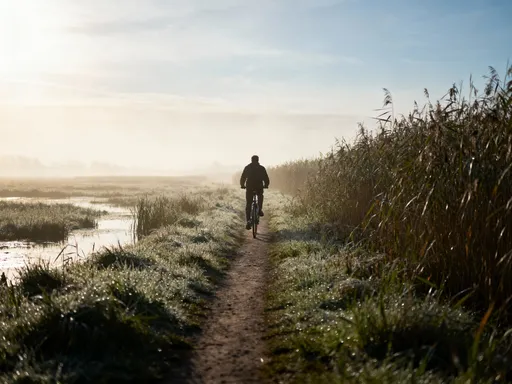
Just a short bike ride northeast of the city lies the Hoogkerk Polder, a vast expanse of grassland, shallow water, and winding dikes that feels more like the countryside of a painting than a place on the edge of an urban area. This is wetland in its most open, unfiltered form—flat, windswept, and alive with movement. From the elevated dike paths, you can see for miles: flocks of birds rising and falling in unison, clouds racing across the sky, and the occasional heron standing motionless in the reeds. It’s a landscape that invites stillness, not because it’s empty, but because it’s full of subtle life.
The Hoogkerk Polder plays a crucial ecological role. Its mix of moist meadows and seasonal flooding creates ideal conditions for amphibians, insects, and especially birds. It’s a key stopover for migratory species traveling along the East Atlantic Flyway. In spring and autumn, you might see thousands of geese resting on the fields, their calls filling the air like distant music. Lapwings, redshanks, and snipes nest in the grasses, and in quieter corners, kingfishers dart between channels. The area is protected under the European Union’s Natura 2000 network, which ensures that its ecological value is preserved even as the city grows nearby.
What makes this place special for visitors is its openness and lack of crowds. Unlike more popular nature spots, there are no visitor centers or cafes here—just trails, observation points, and an overwhelming sense of space. You can cycle the dike roads or walk along the grassy edges, always with panoramic views. The wind is constant, so a windbreaker is recommended, but it also carries the clean, fresh scent of wet earth and grass. For those raising children or managing busy households, this kind of open, uncrowded space is rare and precious. It allows for unstructured time—where you can simply walk, talk, or sit without distractions. In a world that often feels too loud and too fast, the Hoogkerk Polder offers a different rhythm: slow, steady, and deeply calming.
De Oostvaarders: A Hidden Gem of Reclaimed Wild
South of Groningen, near the village of Ten Boer, lies De Oostvaarders—a nature reserve with a remarkable story. Once used for agriculture, this area was gradually abandoned and allowed to return to nature through a process known as natural regeneration. Without heavy intervention, waterways formed, reed beds expanded, and wildlife returned. Today, it’s a thriving mosaic of open water, scrubland, and marshy meadows that supports an astonishing variety of species. It’s a living example of how nature, when given space and time, can heal and rebuild itself.
Walking through De Oostvaarders feels like stepping into a wilder version of the Netherlands—one shaped not by human design, but by natural forces. Kingfishers nest in the riverbanks, otters have been spotted in the channels, and rare birds like the marsh harrier and the bittern find shelter in the tall reeds. The reserve is especially rich in dragonflies and butterflies, which dance over the water in summer. Because the terrain is soft and sometimes wet, visitors are encouraged to stay on the designated wooden boardwalks and gravel paths. This not only protects the fragile ecosystem but also enhances the experience—each turn offers a new framed view of water, sky, and greenery.
For a truly peaceful visit, go early in the morning. The light is soft, the air is still, and the chances of seeing wildlife are highest. Bring binoculars, as many of the birds keep their distance. A small information board at the entrance provides a map and seasonal highlights. There are no facilities, so come prepared with water and snacks. What makes De Oostvaarders so valuable is not just its biodiversity, but its quiet accessibility. It’s not a tourist attraction—it’s a local treasure, used by birdwatchers, photographers, and anyone seeking a moment of solitude. In a society that often measures value in productivity, this place reminds us that some of the most important spaces are those that simply are.
How to Plan Your Own Nature Day (Without the Stress)
One of the most beautiful things about exploring nature around Groningen is how simple it can be. You don’t need special gear, a lot of time, or a detailed itinerary. The key is preparation—not perfection. Start by choosing a destination based on your energy and schedule. If you only have a few hours, Hoge Veer or a short stretch of the Hoogkerk dike is perfect. For a full day, combine two locations—say, a morning walk in De Oostvaarders followed by an afternoon bike ride through the polder.
Biking is the most practical and enjoyable way to travel between the city and these natural areas. Groningen’s extensive network of bike paths connects directly to the reserves, and most trailheads have secure bike racks. A comfortable city bike with lights and a small basket or backpack is all you need. Dress in layers—Dutch weather changes quickly—and always include a waterproof jacket. Even on sunny days, the wind near wetlands can be chilly. Pack water, a simple snack like fruit or sandwiches, and a paper map or downloaded offline map in case your phone signal fades.
Timing matters. Mornings are best for birdwatching and avoiding crowds. Weekdays are quieter than weekends. If you’re going with children, plan for frequent stops and bring something engaging—a small notebook for sketching birds, a magnifying glass for examining leaves. The goal isn’t to cover miles, but to be present. Let the pace be slow. Stop to listen. Point out a bird’s call or the way light reflects on water. These small moments add up to a deeper experience. And remember, you don’t have to go far to feel like you’ve escaped. Often, the most meaningful journeys are the shortest ones.
Why These Spaces Matter Beyond Beauty
The protected areas around Groningen are more than scenic escapes—they are vital components of a healthy environment and a balanced life. Ecologically, they support biodiversity by providing habitats for species that struggle to survive in urban settings. Wetlands filter water, forests store carbon, and meadows support pollinators. These functions are quietly essential, working behind the scenes to sustain the quality of the air we breathe and the water we use. In the face of climate change, such green spaces also act as natural buffers, absorbing rainwater during storms and reducing the urban heat island effect.
Legally, these areas are safeguarded by Dutch environmental laws and European directives like the Habitats Directive and the Birds Directive. Local stewardship groups, often made up of volunteers, help maintain trails, monitor wildlife, and organize clean-up days. This community involvement reflects a shared understanding: nature isn’t something ‘out there’ to be visited occasionally, but a shared responsibility. When you walk these paths, you’re not just a visitor—you’re part of a larger effort to preserve these spaces for future generations.
On a personal level, I’ve come to see these natural areas as essential to my well-being. As a woman managing a busy household, the mental load can be heavy. There’s always something to plan, someone to care for, a list that never ends. But in the quiet of the forest or the open space of the polder, that weight lifts. I’m not solving problems—I’m just being. And in that stillness, I find clarity. Nature doesn’t ask for productivity. It asks only that you notice—the shape of a leaf, the flight of a bird, the way the wind moves through the reeds. These moments of attention are small, but they restore something deep. They remind me that I’m part of something larger, and that peace isn’t found in doing more, but in being present.
Final Thoughts: Finding Calm in the Quiet Wild
Living in Groningen has taught me that nature doesn’t have to mean a distant mountain or a faraway forest. It can be right at your doorstep, waiting just beyond the last row of houses. These green spaces have changed how I see the city—not as a place that separates me from nature, but as a gateway to it. They’ve taught me to move more slowly, to listen more closely, and to appreciate the small, wild things that thrive even in the margins.
What I’ve learned most is that restoration doesn’t require grand gestures. A single hour spent walking in silence, watching birds take flight, or feeling the sun through the trees can be enough to reset your spirit. These moments aren’t escapes from life—they’re part of a richer, more grounded way of living. And they’re available to anyone willing to step outside, hop on a bike, and follow the path where the city ends and the wild begins.
So if you’ve been feeling overwhelmed, disconnected, or simply stuck in routine, I encourage you to explore these nearby sanctuaries. Bring your family, your journal, or just yourself. Walk without a destination. Sit without a purpose. Let the stillness speak. And when you return, you might find that the city feels different—not because it changed, but because you did. These quiet wilds are not just places on a map. They are invitations—to breathe, to pause, to remember what matters. And they’re closer than you think.